
Blog Summary: Healthcare recruiting can improve by building talent pools, reaching passive candidates, and offering flexible staffing options. Personalized outreach, clear job descriptions, employee referrals, training partnerships, and stronger employer branding expand the talent pipeline. Data-driven hiring and simpler credentialing and onboarding can also reduce delays and improve candidate experience.
Finding qualified healthcare professionals is getting harder. Open roles can stay vacant for weeks. At the same time, skilled candidates have more choices.
Traditional job postings often fail to reach the right people. A stronger strategy needs better sourcing, faster hiring, and a better candidate experience.
For professionals exploring locum tenens careers, flexible work options can open another path in healthcare. Here are 10 creative solutions that healthcare organizations can use to attract skilled professionals and build a stronger talent pipeline.
1. Build Talent Pools Before You Need Them
Waiting for an opening before searching for candidates creates pressure. It also slows down the hiring process. Instead, build talent pools for roles that stay in demand. Keep in contact with nurses, physicians, therapists, and other healthcare professionals who match your needs.
Organize candidates by specialty, experience, location, and credentials. Then, recruiters can reach the right people when a position opens. This approach also keeps hiring more consistent. You spend less time starting each search from scratch.
2. Reach Passive Healthcare Candidates
Many skilled professionals are not actively applying for jobs. Many remain open to the right position when the role matches their experience and career goals. That makes passive candidate outreach an important part of healthcare recruiting. Start with a clear message that focuses on the role and its value.
Reaching qualified professionals matters more than ever as demand for healthcare workers continues to grow. The U.S. Bureau of Labor Statistics projects about 1.9 million openings in healthcare occupations each year, on average, from 2024 to 2034, driven by employment growth and the need to replace workers who leave these occupations.
According to the Occupational Outlook Handbook: Healthcare Occupations, this continued demand makes proactive candidate outreach an important part of building a reliable healthcare talent pipeline.
Avoid sending the same message to every person. Mention the candidate’s specialty or experience when it fits the role. Keep the first message short. Give the candidate a clear reason to respond.
Personalized outreach creates a conversation instead of simply pushing another application. It also starts a conversation instead of pushing an application.
3. Make Job Descriptions Candidate-Focused
A job description should do more than list duties. It should show candidates why the position deserves their attention. Start with the most important details. Explain the role, schedule, work setting, and key requirements in simple language.
Also, remove long blocks of text. Use short sections and clear bullet points.
Focus on what matters to the person reading the posting.
- Role And Specialty
- Schedule And Work Setting
- Required Credentials
- Key Responsibilities
- Career Growth
- Compensation Details
Clear job descriptions save time for both sides. Candidates understand the role sooner. Recruiters also receive more relevant applications.
4. Improve Candidate Communication
Silence creates doubt during a job search. A candidate who receives no update may lose interest. Set clear communication points throughout the hiring process. Tell applicants what happens after they apply.
Then, keep them updated after interviews and screening steps. Even a short message gives candidates useful information. Recruiters should also answer questions quickly. Clear communication builds trust before the first workday.
For healthcare professionals, this matters even more during a competitive search. Skilled candidates often have several options.
A simple communication plan keeps strong candidates engaged from application to placement.
5. Use Flexible Staffing Options
Healthcare workers have different needs. Some professionals want full-time positions. Others prefer temporary, part-time, per diem, or contract assignments.
No single work model fits every candidate. Flexible options widen the pool of professionals interested in a role. For physicians, locum tenens assignments provide another option for temporary coverage. Nurses and allied health professionals often seek flexible schedules that match their career goals.
Healthcare employers should start by reviewing each role’s needs. Then, they can select a staffing model that fits the position. Flexibility also gives professionals more control over their schedules. That factor matters when candidates compare several opportunities.
6. Create a Strong Employee Referral Program
Your current employees know people in their professional networks. That network becomes a valuable source of qualified candidates. Create a simple referral process. Tell employees which roles need attention and how to submit referrals.
You also recognize employees who refer successful candidates. Keep the process easy and transparent. A referral program works best when employees understand the kind of professional you need. Give them clear information about the role and required credentials.
This approach turns your workforce into an additional sourcing channel. It also creates a more personal path into the organization.
7. Build Relationships With Training Programs
Healthcare recruiting should start before graduation. Schools and training programs connect employers with people entering the field. Develop relationships with nursing schools, medical programs, and allied health education providers. Attend career events and speak with students about available career paths.
You can also create internship or early-career hiring programs when appropriate. These relationships introduce your organization to future professionals.
Healthcare workforce demand also makes early talent development valuable. The U.S. Bureau of Labor Statistics projects employment in the healthcare and social assistance sector to grow 8.4% from 2024 to 2034, adding roughly 2.0 million jobs, more than any other major industry sector. The Industry and Occupational Employment Projections Overview and Highlights, 2024–34, show why healthcare organizations need to build relationships with future professionals before staffing needs become urgent.
Start these efforts early. A student who learns about your organization today could become a strong candidate later. This strategy also supports long-term workforce planning. It creates a steady connection with emerging healthcare talent.
8. Use Data to Guide Your Hiring Strategy
Recruiters need more than a list of open jobs. They need to know where qualified professionals are and what they value. Track useful hiring data across roles and locations. Look at application numbers, time to hire, candidate sources, and offer acceptance rates. Then, use those insights to adjust your approach.
For example, a role with few qualified applicants needs a wider search. Another position needs stronger outreach or a different staffing model. Data also shows where the hiring process slows down. As a result, recruiters focus on the steps that create the biggest delays.
The goal is simple. Use real hiring results to make better decisions.
9. Strengthen Your Employer Brand
Candidates research employers before they apply. Your reputation influences that decision. Show what working at the organization feels like. Share employee stories, career growth examples, workplace values, and real insights from healthcare professionals.
Your careers page should also answer basic candidate questions. Keep information clear and easy to find. Social media adds another way to show the human side of the workplace. Feature employees, workplace events, professional development, and community involvement.
Avoid making every post about an open position. Build a consistent picture of the organization instead. A strong employer brand gives candidates a reason to remember you. It also supports recruitment efforts across different roles.
10. Simplify Credentialing and Onboarding
Healthcare hiring has an extra layer of complexity. Credentials, licenses, certifications, and other documents need careful review. A slow process causes qualified candidates to lose interest. It also delays the start of an assignment.
Create a clear checklist for each role. Tell candidates which documents they need and when they need to submit them. Keep communication clear during verification. If a document needs attention, explain the next step quickly.
Onboarding should follow the same approach. Give new hires the information they need before their start date. A smoother process reduces confusion and gives professionals a better first impression of the organization.
Common Healthcare Recruiting Mistakes to Avoid
Even strong recruiting strategies lose value when basic hiring problems remain. Healthcare staffing agencies should review the candidate journey from application to placement.
The following common mistakes deserve special attention:
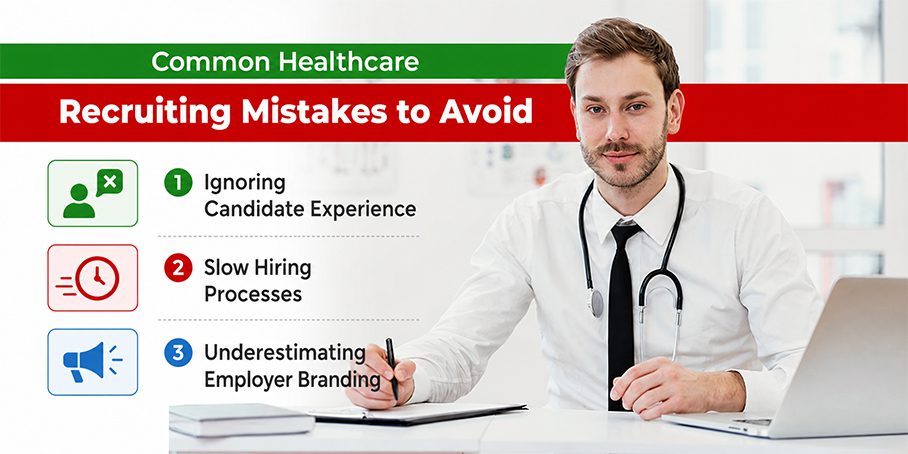
Ignoring Candidate Experience
Candidates remember how an employer treats them. A confusing application or long period of silence creates frustration. Make the application simple. Keep instructions clear and reduce unnecessary steps.
Also, communicate after each major stage. Candidates should know where they stand and what comes next. A positive experience matters even when you do not hire the person. Candidates may apply again later. They may also recommend your organization to other professionals.
Slow Hiring Processes
Qualified healthcare professionals rarely stay available for long. Delays create a serious risk. Review every stage of your hiring process. Look at application reviews, interviews, credential checks, approvals, and offers. Then, remove steps that add little value. Set clear responsibilities for recruiters and hiring managers.
Fast hiring does not mean careless hiring. You still need proper screening and credential checks. The goal is a process that moves with purpose. Candidates should not wait days for a simple update.
Underestimating Employer Branding
A weak employer brand makes recruitment harder. Candidates often compare organizations before choosing where to apply. Start by checking how your organization appears online. Review your careers page, job listings, social channels, and employee reviews.
Then, make sure your message matches the actual workplace. Highlight real benefits, growth paths, work culture, and employee experiences. Your recruiters also represent the brand. Every conversation shapes how candidates view the organization.
Employer branding should therefore work alongside sourcing. One attracts attention. The other gives candidates a reason to stay interested.
How Staffing Partners Strengthen Recruitment
Healthcare organizations often lack the time or resources to manage every hiring task on their own. A healthcare staffing partner adds another recruitment channel. Staffing specialists connect employers with qualified healthcare professionals and understand the demands of different clinical roles and work settings.
This model works well when an organization needs staff for temporary coverage. It also supports employers that face urgent staffing gaps.
Imperial Locum focuses on healthcare staffing and connects organizations with healthcare professionals across multiple disciplines. Its staffing model supports facilities that need qualified talent for their workforce needs.
Staffing partners also expand access to professionals who are not actively searching job boards, giving employers another source of qualified talent.
Measure What Your Recruiting Strategy Delivers
Creative ideas need measurable results. Otherwise, it becomes difficult to know which methods deserve more attention.
Start with a few key metrics.
- Time to Hire
- Qualified Applicants
- Application Completion Rate
- Interview-to-Offer Rate
- Offer Acceptance Rate
- Source of Hire
- Candidate Response Rate
- New Hire Retention
Review these numbers regularly. Look for changes across roles and locations.
For example, a high number of applications means little if few candidates meet the requirements. In that case, focus on candidate quality instead of application volume.
Also, compare results across sourcing channels. This shows which channels bring the strongest professionals. Over time, these insights sharpen your hiring strategy. You know what works, what slows hiring, and where to make changes.
Build a Stronger Healthcare Recruiting Strategy
Healthcare recruiting requires more than posting jobs and waiting for applications. Skilled professionals expect clear communication, simple processes, and work options that fit their needs.
Start with the areas that create the biggest hiring challenges. Build talent pools before vacancies become urgent. Reach passive candidates. Improve job descriptions and communication. Next, look at the wider hiring experience. Strengthen employee referrals, employer branding, training partnerships, and credentialing workflows.
Healthcare organizations also need a flexible staffing approach. When permanent hiring takes time, temporary and locum options can support workforce needs.
Imperial Locum connects healthcare organizations with qualified professionals and flexible staffing solutions.
FAQs
What Recruitment Strategies Work Best for Healthcare Organizations?
Effective strategies include simple applications, competitive pay, flexible schedules, and modern technology. These approaches attract more qualified candidates.
What Are the Three P’s of Healthcare Recruitment?
The three P’s are People, Process, and Platform. They focus on finding qualified candidates, improving hiring steps, and using technology to support recruitment and retention.
Why Do Healthcare Settings Need Specialized Recruitment Strategies?
Healthcare hiring has unique needs. Strategies must address clinical skills, licensing requirements, and how staffing levels affect patient care.
How Does Technology Support Healthcare Recruitment?
Technology can simplify applications and support flexible work arrangements. It also reduces administrative work and can make an employer more attractive to candidates.
What Are the Biggest Challenges in Healthcare Recruiting?
Healthcare recruiters face talent shortages, high turnover, credentialing requirements, and geographic limits. Strong competition also makes it harder to attract qualified professionals.
What Sourcing Strategies Work for Nursing Recruitment?
Effective nursing recruitment uses AI-powered sourcing, passive candidate outreach, and talent pipelines. Recruiters can also use compensation data to stay competitive.