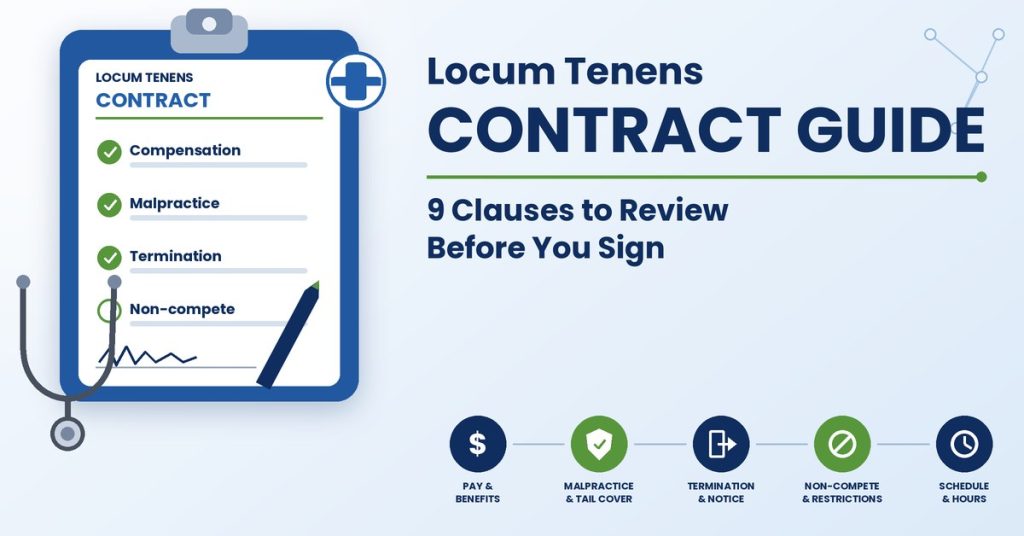
A locum tenens contract sets your pay, schedule, malpractice coverage, and exit rights for a temporary assignment. Before you sign one, review nine clauses: assignment scope, term, rates, worker classification, expenses, malpractice and tail coverage, cancellation, termination, and non-compete terms. The malpractice, cancellation, and non-compete clauses carry the most financial risk, so read those three twice.
Many clinicians skim a locum contract because the assignment is short. But a short assignment can still leave long obligations behind. This guide walks through each clause in plain English, with the questions worth asking before you put your name on anything.
What Does a Locum Tenens Contract Cover, and Who Is It With?
Your contract is usually with the staffing agency, not the hospital or clinic where you’ll work. The agency has a separate agreement with the facility, and you rarely see it. Some of the facility’s rules, like cancellation terms or credentialing deadlines, still flow down into your paperwork.
Ask the recruiter which facility terms apply to you, and ask for them in writing. Then read the nine clauses below in order.
1. Does the Assignment Scope Match What You Were Told?
Start with the clause that describes the work. A recruiter may say outpatient clinic, four days a week, while the contract says duties as assigned by the facility. Those can be very different jobs.
Check the location, specialty, schedule, weekly hours, patient volume, supervision, and EHR system. If key details live only in an email, ask the agency to attach them to the contract.
How Are Call and Extra Hours Handled?
Look for how call is scheduled and paid, and whether hours beyond the baseline earn overtime or a higher rate. If the contract is silent, extra hours may go unpaid.
2. How Long Is the Term, and What Happens at the End?
Confirm the start date, end date, and whether the contract renews automatically. Auto-renewal can lock you into another block of time, so note any opt-out deadline. Also read the extension language. Does extending keep your rate, or reopen the negotiation?
Assignment length limits can vary by facility and state, so ask whether yours could hit one. Our guide on how long locum tenens can work explains how assignment length and extensions typically play out.
3. Do the Locum Contract Rates Add Up to What You Expect?
Locum contract rates should appear as exact numbers: hourly, daily, or flat, with separate figures for call, holidays, and overtime. “Competitive rate” is not a rate.
Then run the math on the whole package: hours times rate, plus call pay, plus any guaranteed minimum, minus costs you’ll cover yourself. A higher hourly rate with no guarantee and unreimbursed travel can pay less than a lower rate with both.
When Do You Actually Get Paid?
Find the pay cycle and what triggers payment, which is usually approved timesheets. Ask what happens if the facility is slow to sign off. For the bigger picture on rates, taxes, and benefits, read how locum tenens pay and salary work.
4. Are You an Independent Contractor or an Employee?
Many locum clinicians are paid as 1099 contractors, while others are W-2 employees of the agency. That difference affects your taxes, benefits, and sometimes your insurance.
The IRS doesn’t treat a job title as the answer. It looks at how much control the payer has over your work, how the money side is handled, and what the written agreement and the day-to-day relationship show. A contract that simply labels you a contractor isn’t enough on its own. If your contract calls you a contractor but dictates your hours and methods, ask why. The IRS guidance on independent contractor vs. employee status is a good starting point, and a CPA can explain what your classification means for your return.
5. Who Pays for Travel, Lodging and Licensing Costs?
List every cost and mark who covers it: flights, rental car or mileage, housing, meals, state license fees, and credentialing fees. Then check the reimbursement rules. Some contracts cap expenses, require receipts within a set number of days, or only pay for pre-approved bookings.
One detail people miss is what happens to nonrefundable tickets or a lease if the assignment is cancelled before you start. That question leads straight to clause 7.
6. What Malpractice Coverage Comes With the Assignment, and Who Pays for Tail?
Your contract should state the type of coverage, the limits, and who pays for tail coverage. A vague answer here can cost the most later.
Claims-Made vs. Occurrence Coverage
An occurrence policy covers incidents that happen during the policy period, no matter when the claim is filed. A claims-made policy only responds if it’s active when the claim is filed. If a claims-made policy ends with your assignment, you need tail coverage, also called an extended reporting endorsement, to stay protected for later claims. Don’t assume tail is handled for you. The contract itself should spell out whether you need it and whether you or the agency pays for it.
Ask three direct questions. Is the policy claims-made or occurrence? Is tail included, and at whose expense? What are the per-claim and total limits?
Who Does the Indemnification Clause Protect?
An indemnification clause decides who pays when a claim or loss arises. Watch for one-sided wording that makes you responsible for the agency’s or facility’s own errors. This is a good clause to have an attorney read.
7. What Does the Cancellation Clause Say If the Facility Cancels?
A cancellation clause sets the notice and any payment owed when someone calls off an assignment. In many contracts, it covers pulling out before the start date, while termination covers ending an assignment already underway. Check how yours draws that line.
Look for four things: the notice the facility must give, whether you’re paid for booked days, whether documented nonrefundable costs are reimbursed, and what happens if you cancel.
What Does a Balanced Clause Look Like?
Notice periods that apply to both sides, reimbursement for documented costs, and no penalty for cancellations outside your control. Cancellation terms are often firm because they mirror the agency’s deal with the facility. Your best move is to understand them before you book travel.
8. How Can Either Side End the Contract Early?
Look for termination with cause and without cause. Without-cause termination usually requires written notice, so check how many days. With-cause termination should define cause. A phrase like “unprofessional conduct” with no definition gives the other side wide room.
Ask for a cure period, which is a short window to fix a problem before the contract ends. Also confirm you’ll be paid for all work through your last day, and when that final payment arrives.
9. Does the Contract Include a Locum Non-Compete or Non-Solicitation Clause?
Many do, though they differ from a typical employee non-compete. A locum non-compete often bars you from working directly for the facility, or its affiliates, for a set period after the assignment ends. Some add fees if the facility hires you directly. The goal is to keep the agency from being cut out of future placements.
What Is the Legal Picture Right Now?
Non-competes are mostly governed by state law. In September 2025, the FTC gave up its court fight to revive a nationwide non-compete ban. It also contacted healthcare employers and staffing firms about tightening up restrictive terms. This analysis of the FTC’s September 2025 actions covers the details. States are moving too. Utah went further. A law that took effect on May 6, 2026 removes most non-competes for healthcare workers. Rules differ by state, so check yours.
Which Wording Should You Question?
Look at the duration, the geography, which entities are covered, and whether there’s a buyout. A multi-year or statewide restriction for a short assignment deserves pushback. An attorney can tell you whether it would hold up where you’ll work. This guide is general information, not legal advice.
Which Locum Contract Terms Can You Actually Negotiate?
Some terms bend more than others. This table shows where clinicians commonly find room, though individual contracts vary.
| Usually More Flexible | Usually Firmer |
| Start date and schedule details | Malpractice limits tied to the agency’s policy |
| Rate, call pay, and guarantees | Facility-driven cancellation notice |
| Expense caps and reimbursement timing | Indemnification language |
| Extension terms | Credentialing requirements |
| Non-solicit scope and buyout |
Spend your negotiating effort on the left column and plan around the right. Ask early, and get any change in writing.
What Should You Do Before You Sign?
- Request the full contract, including every exhibit, not a summary.
- Compare it line by line with the recruiter’s offer email.
- Mark blanks, vague phrases like “as assigned,” and any deadlines.
- Send your questions in writing and keep the replies.
- Have an attorney review the malpractice, indemnification, and non-compete clauses.
- Keep a fully signed copy.
Your Next Step Before You Sign
A good locum tenens contract should clearly outline dates, pay, coverage, and exit terms. If any of these nine areas feels unclear, ask for written clarification before signing. When you’re ready to explore your options, browse open locum jobs to find assignments that fit your goals.
Locum Tenens Contract FAQs
Is a Recruiter’s Email the Same as a Signed Contract?
No. An email shows intent, but the signed contract is what governs, and it may say something different. If the two don’t match, get the contract corrected before you sign.
Can I Work With More Than One Locum Agency at the Same Time?
Often yes, but check for an exclusivity clause first. Some contracts limit where else you can work during the assignment, or prevent two agencies from submitting you to the same facility.
Do I Get Paid If the Clinic Closes or Patient Volume Drops?
Only if the contract says so. Look for guaranteed hours, minimum pay, or language covering closures, low census, and sick days. If it’s missing, ask.
What If My Credentialing or License Isn’t Finished by the Start Date?
Check whether the contract treats that as a cancellation, a delay, or your breach. It should say who is responsible for delays and what you’re owed, if anything, if the start date moves.
Should a Lawyer Review My Locum Contract?
For high-stakes clauses like tail coverage, indemnification, and non-competes, it’s worth it. A one-time review costs little compared with a surprise tail bill or a restriction you didn’t understand.
How Much Time Should I Have to Review the Contract?
Enough to ask questions and get answers. If you’re pressured to sign within hours, slow down. A reasonable agency will give you time to read the full document.