
A healthcare interview is about more than what you know. It’s about how you think, communicate, and respond when patient care is on the line.
You may be asked about your experience, difficult patients, teamwork, or why you chose healthcare. Knowing what to expect can make those questions much easier to answer. Whether you’re applying directly to a hospital or clinic or exploring opportunities through healthcare staffing solutions, a little preparation can go a long way.
Here are ten common interview questions for healthcare and how you can answer them to leave a strong impression.
1. Tell Me About Yourself
While this isn’t a question in the literal sense, tell me about yourself is often how a healthcare interview begins. It gives the interviewer a quick idea of who you are, what experience you bring, and what you’re looking for.
Here’s what you should do:
- Keep your answer focused on your professional background.
- Mention your current or most recent role.
- Highlight a relevant skill or area of experience.
- Briefly explain why you’re interested in the position.
For example: “I’m a registered nurse with five years of experience in acute care. I’ve developed strong patient communication and prioritization skills, and I’m now looking for a role where I can continue providing direct patient care.”
You don’t need to tell your whole career story. Aim for a clear, 1–2 minute answer that gives the interviewer something to build on.
2. Why Did You Choose Healthcare?
The classic why healthcare question may sound simple, but the interviewer is trying to understand what genuinely drew you to the field and what keeps you motivated.
How to answer
You don’t need to give a big, inspiring speech about changing the world. A simple, honest answer is usually more convincing than saying something surface-level. Maybe you enjoyed helping people, became interested in medicine, had a personal experience that influenced your career choice, or found that you were well suited to patient care.
Try to connect your reason with the work you actually do. For example, if you enjoy building relationships with patients, explain that. If you like the combination of clinical knowledge and problem-solving, say so.
When explaining your reason for seeking health care as a profession, the key is to be honest and specific. Your answer should sound like you, not like something you memorized for an interview.
4. What are your greatest strengths?
This may seem like an easy question, but the strengths you choose can tell the interviewer a lot about your personality and work ethic.
How to answer
Focus on professional strengths over personal ones. Maybe you’re good at staying calm with difficult patients, communicating clearly, solving problems, or managing competing priorities.
Try not to simply list qualities. Pick one or two strengths and briefly explain how you use them at work. For example, instead of saying you have good communication skills, you could mention how you help patients understand their care or work through concerns with their families.
5. What is one area you are working to improve?
This question is not an invitation to list everything you struggle with. The interviewer wants to see whether you can recognize an area for improvement and take steps to work on it.
Choose a real but manageable area. Avoid weaknesses that could raise serious concerns about patient safety or your ability to do the job. Instead, think about a skill you have been actively developing.
For example: “Earlier in my career, I found it difficult to delegate because I wanted to make sure everything was done correctly. With experience, I’ve learned to communicate expectations clearly and trust my team more.”
A good answer has three parts:
The area: What are you working on?
The action: What are you doing to improve?
The progress: What has changed?
Don’t use a weakness that is really a disguised strength, such as I work too hard. Honesty and self-awareness make a more convincing answer.
6. How Do You Handle Stressful Situations?
Healthcare can get busy quickly, so interviewers want to know how you stay focused when the pressure builds.
Don’t just say that you work well under pressure. Give a simple example of how you manage stress. You might mention prioritizing urgent tasks, communicating with your team, or taking a moment to assess the situation before acting.
Keep the focus on patient care. Show that you can stay calm, make sound decisions, and ask for help when you need it.
7. Tell me about a difficult patient interaction
Patient interactions do not always go smoothly, and healthcare employers know that. Therefore, the interviewer wants to know how you handle difficult situations without letting frustration affect patient care.
Think of a real situation where a patient was upset, frustrated, confused, or unwilling to cooperate. Briefly explain what happened, how you responded, and what the outcome was.
Sample answer: “I once worked with a patient who was frustrated about a delay in care and became upset with the staff. I listened to their concerns, explained what was happening, and made sure they knew what to expect next. Once the patient felt heard, the conversation became much easier.”
Keep the focus on your approach, not the patient’s behavior. Show patience, clear communication, and good judgment.
8. How do you see the future of healthcare?
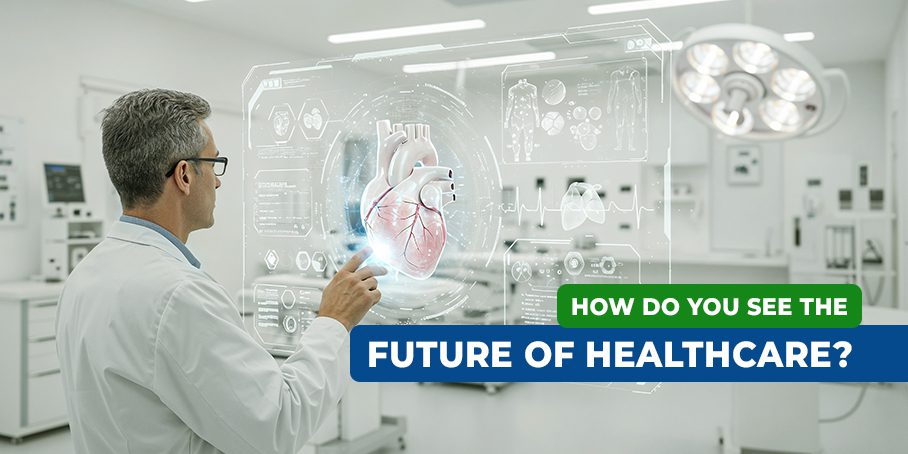
A lot of job seekers go wrong here: This question is less about predicting exactly what healthcare will look like. Instead, the interviewer wants to know whether you understand how the field is changing and can adapt with it.
You could mention areas such as telehealth, digital health records, AI, preventive care, or the growing focus on patient-centered care. Pick one or two that you genuinely understand rather than trying to mention every trend.
Sample answer: “I think healthcare will continue using technology to make care more accessible and efficient. At the same time, I don’t think technology will replace the need for strong communication and personal care. Healthcare professionals will need to be comfortable with both.”
Keep your answer balanced. Show that you’re open to change while staying focused on what matters most: safe, effective patient care.
9. What would you do if you noticed a potential patient safety issue?
The interviewer wants to know whether you will speak up when a patient could be at risk. It also shows that you understand your role in protecting the patient and the organization from preventable incidents and legal issues.
Explain that you would assess the immediate risk, take appropriate action within your role, and notify the right person according to workplace procedures.
For example: “If I noticed something that could affect a patient’s safety, I would address the immediate risk if I could do so safely, then inform the appropriate supervisor or clinician and follow the facility’s reporting process.”
10. How do you protect patient confidentiality?
The interviewer wants to know that you understand the importance of protecting patient information in every part of your work.
Keep your answer practical. Mention following HIPAA and facility policies, discussing patient information only with authorized people, and being careful with records, devices, and conversations.
You don’t need to recite privacy laws. Show that confidentiality is part of your everyday practice.
Healthcare Interview Questions by Role: CNA, PCA, and More
The questions you face will depend on the role you are applying for. A physician may need to discuss clinical decisions. In comparison, for CNA hiring, the employer may focus more on direct patient care, communication, and safety. If you’re preparing for a new position, it helps to review questions that match the work you’ll actually be doing.
Interview Questions for Medical Doctors
Interview questions for medical doctors often focus on clinical judgment, patient safety, and decision-making.
You may be asked:
- How do you approach a complex clinical decision?
- Tell me about a challenging patient case.
- How do you handle disagreements with another healthcare professional?
Use real examples where possible. Explain how you assessed the situation, made your decision, and considered the patient’s needs.
PCA Interview Questions
PCA interview questions usually focus on patient care, communication, and knowing when to ask for help.
You may be asked:
- How would you handle a patient who refuses care?
- What would you do if you noticed a change in a patient’s condition?
- How do you protect a patient’s dignity during personal care?
Keep your answers focused on patient safety and respect. If something falls outside your role, explain when and how you would involve the appropriate member of the care team.
PCT Interview Questions
PCT interview questions can cover many of the same areas as PCA interviews, but may also focus on monitoring patients, taking vital signs, documentation, and supporting nurses.
For example, you may be asked:
- What would you do if a patient’s vital signs were outside their normal range?
- How do you prioritize tasks when caring for several patients?
- How do you communicate important changes to the nursing team?
Show that you understand your responsibilities and know when a change needs to be reported.
Clinic Interview Questions
A clinic interview may focus less on emergency situations and more on patient communication, organization, and keeping the day running smoothly.
You might be asked:
- How would you handle an upset patient?
- How do you manage several tasks at once?
- What would you do if the clinic became unusually busy?
Give practical examples from your previous work or training. Even a small example can show how you communicate, prioritize, and respond when things do not go as planned.
Healthcare Interview Tips to Help You Prepare
Good preparation doesn’t mean memorizing every possible answer. It means knowing your experience well enough to talk about it clearly.
Here are a few healthcare interview tips that can help:
- Pay attention to the skills and responsibilities the employer mentions most.
- Think of situations involving patient care, teamwork, conflict, or a difficult decision.
- Refresh anything directly related to the position you’re applying for.
- Don’t claim skills or experience you don’t have. Follow-up questions can reveal gaps quickly.
- Your answers should sound like you, not a script.
- Ask about the role, team, schedule, orientation, or expectations.
- Have your resume, certifications, licenses, and other requested documents ready.
Most importantly, don’t try to give the answer you think the interviewer wants to hear. Give a clear, honest answer that shows how you would approach the job.
Ready to Make the Next Move in Your Career?
A good interview starts with good preparation. But the next step is finding the right opportunity.
If you’re ready for your next healthcare role, explore current opportunities with Imperial Locum and find a position that fits your experience and career goals.