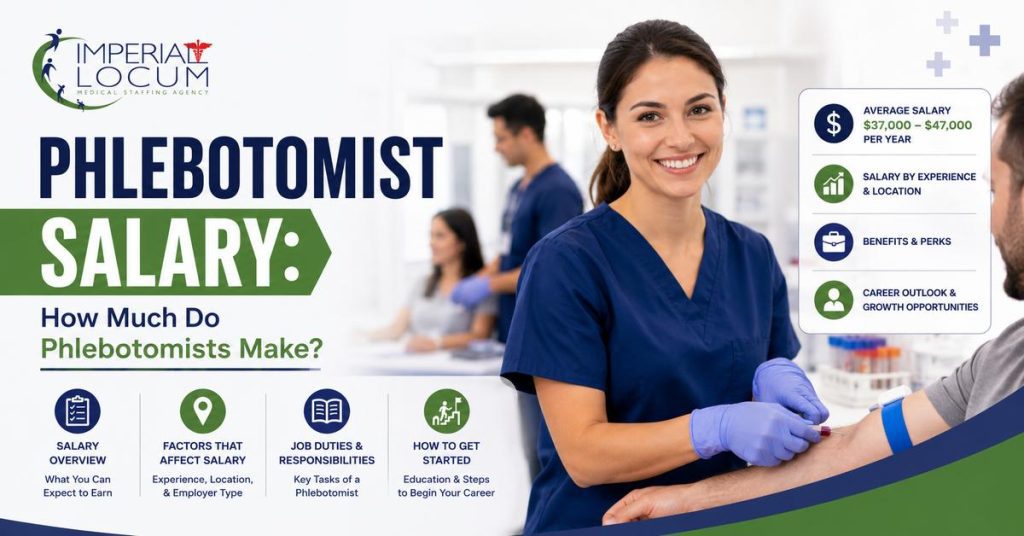
A phlebotomist’s salary depends on location, work setting, and experience. If you’re considering this healthcare career, knowing the national pay range and state-level differences can help you set realistic expectations and choose the right job.
According to the U.S. Bureau of Labor Statistics (BLS), phlebotomists earned a median annual wage of $45,230 in May 2025, equal to about $21.75 per hour. However, pay varies across the country. California, New York, and Massachusetts report higher median wages than many other states.
This comprehensive guide covers national earnings, phlebotomist salary by state, California pay, workplace differences, and practical ways to improve your earning potential.
What Is the Average Phlebotomist Salary?
The national median annual wage for phlebotomists was $45,230 in May 2025. The median is the midpoint of reported wages: half of workers earned more, and half earned less. It is different from the average, which adds all wages together and divides them by the number of workers.
The BLS reported these national wage ranges for May 2025:
- Lowest 10%: Earned less than $35,780 per year.
- Middle 50%: Earned between $38,190 and $48,930 per year, according to O*NET’s national wage distribution.
- Highest 10%: Earned more than $58,780 per year.
These figures provide a useful starting point when researching how much phlebotomists make. However, they do not guarantee what a new graduate or an experienced professional will earn. Actual offers depend on the employer, local labor market, qualifications, and job responsibilities.
Phlebotomist Hourly Pay and Annual Earnings
Phlebotomist hourly pay makes it easier to compare jobs with different schedules. At the national median of $21.75 per hour, a full-time employee working 40 hours per week for 52 weeks would earn approximately $45,240 annually.
| Pay measure | Approximate earnings |
| Median hourly wage | $21.75 |
| Median annual wage | $45,230 |
| Annual pay at $20 per hour | $41,600 |
| Annual pay at $25 per hour | $52,000 |
| Annual pay at $30 per hour | $62,400 |
The annual estimates for hourly rates assume 2,080 paid hours per year, before taxes and deductions. They do not include overtime, bonuses, or unpaid time off.
A higher hourly rate can make a noticeable difference over a full year. However, compare the entire offer before accepting a position. Guaranteed hours, shift requirements, benefits, overtime policies, and contract length can affect your actual income.
Phlebotomist Salary by State
Where you work can have a major effect on your earnings. BLS data for May 2025 shows substantial differences in median annual wages across states. California has the highest median among the states listed below, while Louisiana has the lowest.
The table uses median annual wages, not mean salaries. Figures are from the May 2025 state-level wage data reported through O*NET and based on BLS Occupational Employment and Wage Statistics. Washington, D.C., and Puerto Rico are listed separately because neither is a state.
| State or jurisdiction | Median annual wage |
| Alabama | $37,220 |
| Alaska | $45,900 |
| Arizona | $46,260 |
| Arkansas | $37,450 |
| California | $56,040 |
| Colorado | $47,180 |
| Connecticut | $45,820 |
| Delaware | $48,110 |
| Florida | $40,230 |
| Georgia | $45,840 |
| Hawaii | $47,750 |
| Idaho | $43,400 |
| Illinois | $46,010 |
| Indiana | $39,250 |
| Iowa | $38,240 |
| Kansas | $39,100 |
| Kentucky | $42,480 |
| Louisiana | $36,120 |
| Maine | $45,640 |
| Maryland | $43,480 |
| Massachusetts | $50,170 |
| Michigan | $39,860 |
| Minnesota | $46,000 |
| Mississippi | $36,290 |
| Missouri | $43,120 |
| Montana | $45,470 |
| Nebraska | $39,540 |
| Nevada | $45,760 |
| New Hampshire | $48,660 |
| New Jersey | $48,650 |
| New Mexico | $42,910 |
| New York | $50,530 |
| North Carolina | $43,330 |
| North Dakota | $47,430 |
| Ohio | $39,770 |
| Oklahoma | $39,030 |
| Oregon | $49,160 |
| Pennsylvania | $43,910 |
| Rhode Island | $46,380 |
| South Carolina | $39,010 |
| South Dakota | $39,560 |
| Tennessee | $38,550 |
| Texas | $40,450 |
| Utah | $40,630 |
| Vermont | $46,000 |
| Virginia | $46,340 |
| Washington | $48,880 |
| West Virginia | $39,250 |
| Wisconsin | $46,470 |
| Wyoming | $38,180 |
| District of Columbia | $51,980 |
| Puerto Rico | $29,880 |
Source: O*NET OnLine Wage Data — Phlebotomists based on BLS wage estimates for May 2025. Figures are not adjusted for local living costs.
These figures show why location matters when comparing opportunities. California’s median annual wage is $19,920 higher than Louisiana’s. The difference between locations can influence your career plans, but consider housing, transportation, taxes, and other living costs before choosing a location based on salary alone.
Which States Pay Phlebotomists the Most?
Based on May 2025 median annual wages, the highest-paying locations include:
| State or jurisdiction | Median annual wage |
| California | $56,040 |
| District of Columbia | $51,980 |
| New York | $50,530 |
| Massachusetts | $50,170 |
| Oregon | $49,160 |
| Washington | $48,880 |
| New Hampshire | $48,660 |
| New Jersey | $48,650 |
| Delaware | $48,110 |
| Hawaii | $47,750 |
California leads this group, followed by Washington, D.C., and New York. Several other states report median wages above the national median of $45,230.
Still, a higher state median does not mean every phlebotomist in that state earns more than workers elsewhere. Wages can vary by city, employer, schedule, and experience. Compare local job postings with state-level figures before deciding where to apply.
Phlebotomist Salary in California: What Can You Expect?
California reports a median annual phlebotomist wage of $56,040, or roughly $26.94 per hour when converted using 2,080 annual hours. That is higher than the national median of $45,230.
Your actual pay may differ depending on the city and employer. Major medical centers, diagnostic laboratories, outpatient facilities, and correctional healthcare settings may have different pay structures and job requirements. Living costs also vary across California, so a higher wage does not always mean more disposable income.
California has state-specific requirements for phlebotomists. Candidates generally need the appropriate certification issued through the California Department of Public Health’s Laboratory Field Services program. The correct credential depends on the type of work and the applicant’s qualifications. Check the California Department of Public Health for current eligibility and application requirements.
If you’re looking for work in the state, Imperial Locum lists phlebotomist opportunities, including a position at a correctional facility in Corona. Review the Phlebotomist job at the Correctional Facility in Corona, CA, to check the current listing and its stated pay before applying.
How Does Work Setting Affect Phlebotomist Pay?
Your employer and work environment can influence your earnings. BLS data for May 2025 reports the following median annual wages by industry:
| Work setting | Median annual wage |
| Outpatient care centers | $48,030 |
| Medical and diagnostic laboratories | $46,670 |
| Offices of physicians | $44,500 |
| Hospitals | $44,220 |
| Other ambulatory healthcare services | $39,930 |
Outpatient care centers reported the highest median among these categories. Medical and diagnostic laboratories also reported wages above the national median. Hospitals employed a substantial share of phlebotomists, although their median was lower than that of laboratories and outpatient care centers.
These industry figures are national estimates. They do not represent guaranteed salaries at every facility. When comparing jobs, review the duties, expected patient volume, schedule, benefits, and pay rate together.
What Factors Affect a Phlebotomist’s Salary?
Several factors can influence how much you earn in this role.
Experience: Experienced phlebotomists may qualify for positions that require independent work, strong specimen-handling skills, and familiarity with complex clinical environments. However, national wage data does not establish a specific salary increase for each year of experience.
Certification and state requirements: Some employers prefer candidates with professional certification. Certain states also have specific credentialing rules. Meeting the requirements for your target location can expand the positions for which you qualify.
Employer and location: Hospitals, laboratories, physician offices, and outpatient centers have different staffing needs and pay structures. Local demand and living costs also influence compensation.
Schedule and contract terms: Night shifts, weekends, overtime, and temporary assignments may have different pay arrangements. Confirm which rates and additional payments are included in a written offer rather than assuming every position provides a premium.
Clinical skills: Accurate blood collection, patient communication, specimen labeling, infection control, and proper documentation are essential skills. Strong performance in these areas can help you qualify for roles that match your experience.
How Can You Increase Your Earning Potential?
Start by reviewing job listings in your area and comparing their stated pay with the relevant state and national medians. This gives you a realistic benchmark for evaluating offers.
You can also take practical steps to strengthen your applications:
- Complete an appropriate phlebotomy training program and any required clinical practice.
- Keep certifications, credentials, and required documentation current.
- Build experience with venipuncture, specimen handling, patient identification, and safety procedures.
- Consider different healthcare settings if their requirements match your qualifications.
- Compare the full compensation package, including guaranteed hours, benefits, overtime policies, and contract length.
- Prepare examples of your clinical experience and patient-care skills before interviews.
If you’re interested in contract or temporary healthcare work, review the requirements carefully. Some assignments expect prior clinical experience, current credentials, and additional screening before you can start.
How Long Does It Take to Become a Phlebotomist?
Many phlebotomy training programs take weeks or a few months to complete, but the full timeline depends on your program, clinical practice, certification, and state requirements. California’s credentialing process can add requirements that candidates should plan for before applying.
Start by checking the training and credential rules where you intend to work. You can also read our guide on how long it takes to become a phlebotomist for a breakdown of training timelines and the steps involved in preparing for employment.
Once you meet the relevant requirements, compare open positions based on location, schedule, experience expectations, and compensation. This helps you focus on opportunities that fit your current qualifications and career goals.
Start Your Phlebotomy Job Search
Understanding phlebotomist salary data helps you compare opportunities and set realistic pay expectations. National and state medians provide useful benchmarks, but your actual offer will depend on your qualifications, location, employer, and schedule.
If you’re ready to explore opportunities in California, visit Imperial Locum’s phlebotomist job listings to review available positions and their stated requirements. Compare each opportunity carefully to find a role that fits your experience and career plans.
FAQs
What Is the Job Outlook for Phlebotomists?
According to the U.S. Bureau of Labor Statistics, employment in this field is projected to grow by 7% from 2025 to 2035, with about 18,000 job openings expected each year.
Can Phlebotomists Work Part-Time?
Yes, many phlebotomists work part-time or flexible shifts. Some healthcare facilities offer early morning, evening, and weekend schedules.
Can Phlebotomists Earn $25 an Hour?
Yes, some phlebotomists earn $25 per hour or more. Pay depends on location, experience, employer, and job responsibilities.
Can Phlebotomists Earn More Through Contract Work?
Some contract positions offer competitive hourly rates or different schedules. Pay depends on the facility, assignment, location, and qualifications.
Is Phlebotomy a Good Job for Pre-Med or Pre-Health Students?
Phlebotomy gives pre-health students practical experience with patients and clinical teams. It also helps build communication and specimen-handling skills.
Where Can Phlebotomists Earn the Most After Living Costs?
A higher salary does not always mean greater purchasing power. States with lower living costs may leave workers with more money after everyday expenses.