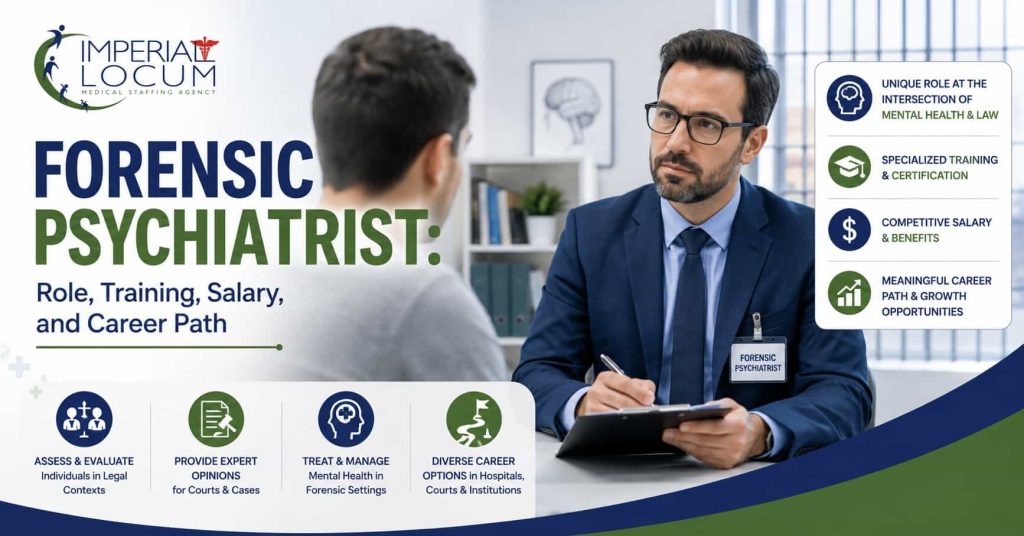
A forensic psychiatrist applies medical and psychiatric expertise to legal questions involving mental health. These doctors evaluate people involved in criminal and civil proceedings, assess mental competency, and provide professional opinions that help courts understand psychiatric conditions.
If you are considering a career as a forensic psychiatrist, you need to understand the required training, daily responsibilities, and available work settings. Salary and employment options also matter. This article explains the forensic psychiatry career path, fellowship training, hospital roles, and factors that influence earnings.
What Is a Forensic Psychiatrist?
A forensic psychiatrist is a medical doctor who applies psychiatric knowledge to legal matters. These professionals assess mental health conditions and explain how those conditions relate to specific legal questions. Their work may involve criminal cases, civil disputes, correctional settings, and court-ordered evaluations.
Forensic psychiatry combines clinical knowledge with an understanding of legal standards. A psychiatrist may evaluate a person’s competency to stand trial, assess mental health concerns related to a legal dispute, or provide expert testimony.
Forensic psychiatrists differ from forensic psychologists in their education and clinical training. Psychiatrists attend medical school and complete a psychiatry residency. They can diagnose mental disorders and prescribe medication. Forensic psychologists follow a psychology-based education and licensing pathway.
Forensic psychiatrists do not investigate crimes or determine guilt. They provide clinical assessments and professional opinions that help legal professionals understand psychiatric evidence.
What Does a Forensic Psychiatrist Do?
A forensic psychiatrist evaluates mental health conditions and explains their relevance to legal proceedings. Specific duties depend on the case, employer, and practice setting.
Assess Competency to Stand Trial
Courts may need to determine if a defendant understands the legal proceedings and can assist an attorney with their defense. A forensic psychiatrist evaluates the person’s mental state, psychiatric history, and ability to understand the case.
The psychiatrist documents the findings and explains how any mental health condition may affect competency. The court makes the final legal determination.
Evaluate Criminal Responsibility
Some criminal cases involve questions about a defendant’s mental state when an alleged offense occurred. A forensic psychiatrist may review medical records, conduct interviews, and assess relevant psychiatric symptoms.
The evaluation can help the court consider an insanity defense under the applicable legal standard. The psychiatrist provides a clinical opinion rather than deciding guilt or innocence.
Prepare Reports and Provide Expert Testimony
Forensic psychiatrists prepare reports that explain their assessments, evidence, and conclusions. Attorneys and courts may use these reports to understand psychiatric findings and their relevance to a case.
Courts may also ask forensic psychiatrists to testify as expert witnesses. They must explain medical concepts clearly, support their opinions with clinical evidence, and answer questions from attorneys. Objectivity is essential, even when one party requests the evaluation.
Assess Risk and Recommend Treatment
Some forensic psychiatrists assess the risk of harm to self or others and recommend appropriate care. In hospital settings, they may diagnose mental disorders, manage medication, monitor treatment progress, and coordinate care with other professionals.
A forensic evaluation and a treatment assessment serve different purposes. Psychiatrists must understand the purpose of each assessment and maintain appropriate professional boundaries.
Where Do Forensic Psychiatrists Work?
Forensic psychiatrists work in clinical, legal, correctional, and academic environments. Their responsibilities depend on the people they serve and the questions they need to address.
- Forensic psychiatric hospitals: These facilities provide specialized mental health care to people admitted through legal processes. Psychiatrists assess patients, develop treatment plans, manage medication, and monitor progress.
- Correctional facilities: Psychiatrists evaluate and treat incarcerated people with mental health conditions. They may provide psychiatric assessments, medication management, and treatment recommendations.
- Courts and legal practices: Some psychiatrists work as independent evaluators or consultants. They review medical records, conduct assessments, prepare reports, and provide expert testimony.
- Hospitals and clinical settings: Psychiatrists may combine forensic evaluations with general psychiatric care, consultation, teaching, or research.
- Government agencies and academic institutions: Experienced professionals may contribute to mental health policy, research, education, and specialized treatment programs.
State hospitals can be relevant to psychiatrists interested in secure inpatient care. California’s Department of State Hospitals (DSH) provides specialized psychiatric treatment to people admitted through court or correctional processes. These include some individuals found incompetent to stand trial or not guilty by reason of insanity.
Physicians exploring hospital-based careers can review Imperial Locum’s psychiatrist job openings.
These listings describe psychiatrist roles in state hospital settings. Review each listing’s current requirements to determine whether it matches your qualifications.
How to Become a Forensic Psychiatrist
Becoming a forensic psychiatrist requires medical education, supervised psychiatric training, and knowledge of legal and ethical responsibilities. The typical US pathway includes the following steps.
1. Complete an Undergraduate Degree
Start by earning a bachelor’s degree. Many aspiring physicians choose biology, chemistry, or another science-related major. However, medical schools set their own admission requirements, so check the prerequisites for your preferred programs.
2. Attend Medical School
Complete an MD or DO program to qualify as a physician. Medical school typically takes four years in the United States. Students study medical science, complete clinical rotations, and develop skills in diagnosing and treating health conditions.
3. Complete a Psychiatry Residency
After medical school, complete an accredited psychiatry residency. Residency generally takes four years and provides supervised experience in psychiatric assessment, diagnosis, and treatment.
During residency, physicians build the clinical foundation they need before pursuing additional forensic training.
4. Complete a Forensic Psychiatry Fellowship
A forensic psychiatry fellowship provides specialized training in the relationship between psychiatric practice and the legal system. Fellowship programs typically last one year after residency, although program details can vary.
You can explore available training options in the Association of Directors of Forensic Psychiatry Fellowships’ Fellowship Programs directory.
Training may cover competency evaluations, criminal responsibility assessments, psychiatric disability, risk assessment, legal standards, report writing, and expert testimony.
Fellowship training can help physicians prepare for specialized forensic roles. However, employers may set different requirements based on the position and its responsibilities. Check individual job descriptions before applying.
5. Obtain a Medical License and Relevant Credentials
You must meet the medical licensing requirements for the state where you plan to practice. Employers may also require board certification or eligibility, relevant experience, background checks, and facility-specific credentialing.
Additional forensic training can strengthen your qualifications for specialized positions. Review the requirements for each role to identify the credentials you need.
Forensic Psychiatrist Salary: What Affects Earnings?
Forensic psychiatrist salary depends on experience, location, employer, clinical responsibilities, and the type of forensic work performed. Government hospitals, correctional health services, private consulting practices, and academic institutions may offer different compensation structures.
Is There a Standard Salary for Forensic Psychiatrists?
There is no single salary figure that applies to every forensic psychiatrist. Salary estimates may use different methods, and some report general psychiatrist earnings rather than compensation for forensic specialists specifically.
The U.S. Bureau of Labor Statistics’ Occupational Outlook Handbook: Physicians and Surgeons reports a median annual wage of $281,870 for psychiatrists in May 2025. This figure provides general salary context, not a forensic psychiatry-specific estimate.
Actual earnings may vary based on qualifications, workload, employer, and contract terms. Additional forensic training may help physicians qualify for specialized positions, but it does not guarantee higher pay.
When comparing opportunities, consider the full compensation package. Base pay, benefits, work hours, call duties, retirement plans, and professional development can affect the overall value of a position.
For state-specific compensation context, see psychiatrist salary information in California. General psychiatrist salary figures can help with comparisons, but they should not be treated as the exact salary for forensic psychiatrists.
Is Forensic Psychiatry the Right Career for You?
Forensic psychiatry may suit physicians who enjoy complex clinical assessments and have an interest in legal questions. The field requires sound medical judgment, analytical thinking, clear writing, and the ability to explain psychiatric findings objectively.
You should also feel comfortable reviewing detailed records, documenting conclusions, and communicating with legal professionals. Some roles involve courtroom testimony, while others focus on hospital-based assessment and treatment.
Consider the type of work you want to do before choosing a training path. Hospital-based positions may appeal to physicians who prefer direct patient care. Independent evaluations and legal consultation may suit those who prefer assessment-focused work.
If you are comparing different career paths, Imperial Locum’s overview of psychiatry careers in California provides additional context about psychiatry employment options. Research fellowship programs, licensing requirements, and employer expectations before committing to additional training.
Frequently Asked Questions
Is a Forensic Psychiatrist the Same as a Forensic Psychologist?
No. Forensic psychiatrists are medical doctors who diagnose and treat mental disorders. Forensic psychologists usually hold doctoral degrees and may specialize in psychological testing.
Do Forensic Psychiatrists Support One Side in a Legal Case?
No. Ethical forensic psychiatrists aim to remain objective and avoid bias. They assess evidence and share professional opinions rather than advocate for either side.
How Are Forensic Psychiatrists Paid?
Forensic psychiatrists often charge hourly fees for work with lawyers or courts. Some work under contracts with courts or public agencies. Their fees should never depend on the outcome of a case.
What Ethical Standards Must Forensic Psychiatrists Follow?
Forensic psychiatrists must follow medical ethics, state licensing rules, and relevant professional codes. These standards help protect their objectivity and professional integrity.
Do Forensic Psychiatrists Work Only With Criminal Defendants?
No. They may evaluate people involved in civil litigation, disability claims, correctional matters, and other legal proceedings. Their responsibilities depend on their practice and the needs of each case.